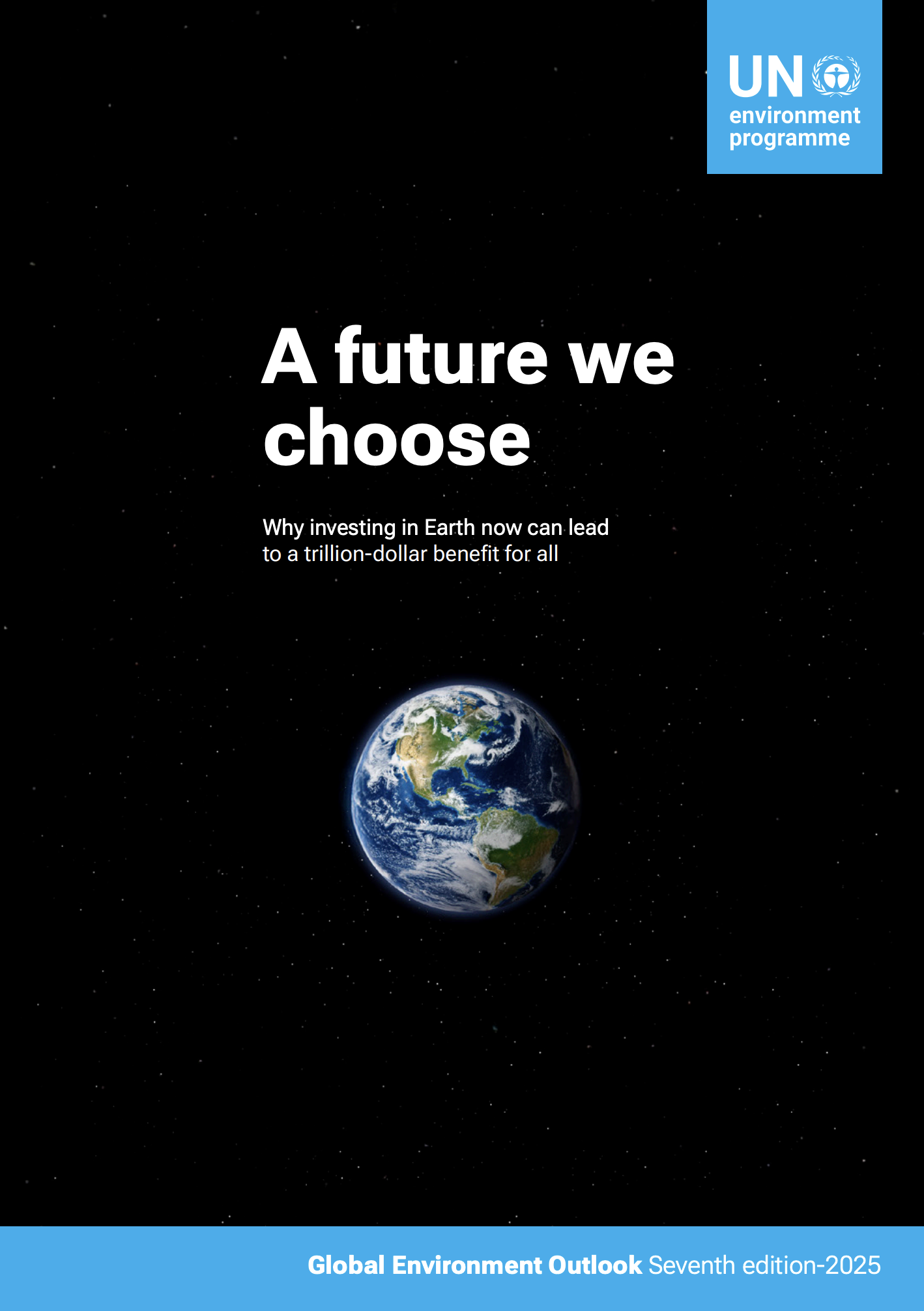
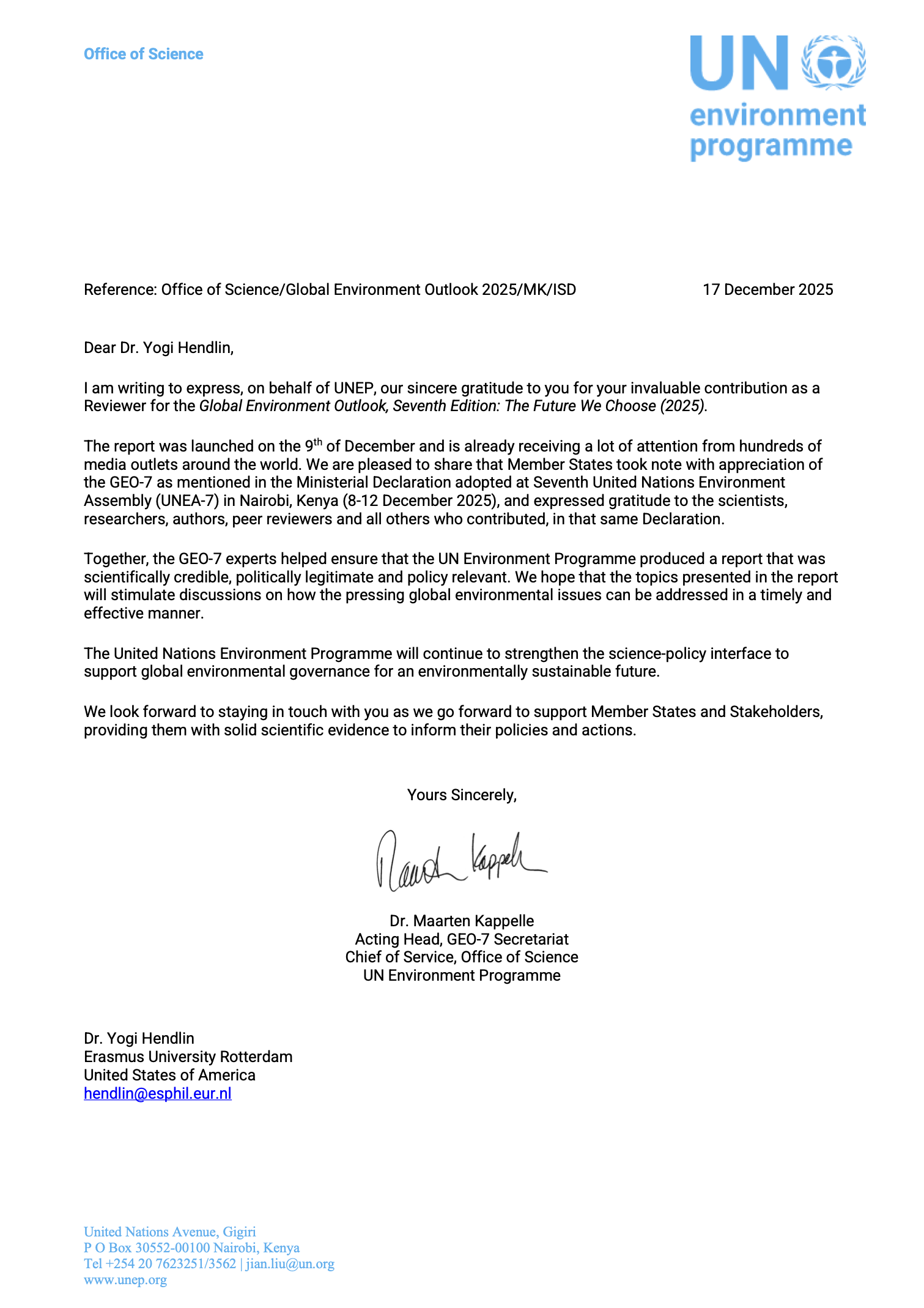
The United Nations Environment Programme (UNEP) has released the Global Environment Outlook, Seventh Edition (GEO-7) — the most comprehensive scientific assessment of the global environment to date. This landmark report synthesizes the latest environmental science and outlines the consequences of current trends alongside paths toward a sustainable future. It is the culmination of a multiyear, globally inclusive process involving 287 experts from 82 countries and over 800 reviewers from around the world. I was one of those 800 reviewers.
GEO-7 goes beyond describing problems. It offers integrated solution pathways that bridge science, policy, economics, and social systems – making it essential reading for decision-makers, scientists, business leaders, and civil society. The report was formally launched at the Seventh Session of the UN Environment Assembly (UNEA-7) in December 2025.
What GEO-7 Finds
1. Planetary Crises Are Intensifying
GEO-7 confirms that global environmental systems continue to deteriorate under current development pathways. Climate change, biodiversity loss, land degradation, and pollution and waste pose escalating risks to human well-being, ecosystems, and economic stability. Without urgent change, these trends will deepen and compound, leading to severe social and economic impacts.
2. A Clear Choice: Business-as-Usual vs Transformation
The report contrasts business-as-usual trajectories with transformative pathways that can deliver major benefits. Current trends risk catastrophic declines in planetary health; by contrast, integrated policies and system-level actions offer a hopeful and economically viable alternative.
3. Economic Logic for Environmental Action
GEO-7’s modelling shows that investing in a stable climate, healthy ecosystems, and a pollution-free planet can yield trillions of dollars in global GDP annually in the long run. Benefits begin to appear by 2050 and continue growing through 2070 and beyond, far outweighing the upfront costs of transformation.
As a scientific reviewer on GEO-7, my expertise helped ensure that several critical facets of the global environmental assessment were thoroughly examined:
• Environmental Impact of Tobacco
The report contextualizes how tobacco production and consumption contribute to deforestation, soil degradation, chemical pollution, and human health burdens. Integrating this evidence into the broader narrative strengthens the equity and public-health significance of environmental policy recommendations.
• Planned Obsolescence
GEO-7 highlights systemic drivers of waste generation, including product design that shortens lifecycles. Addressing planned obsolescence is essential to advancing circular materials and waste systems – a core transformation pathway in the report.
• PFAS and Novel Entities
The assessment of pollution and novel chemical threats, including PFAS (“forever chemicals”), reflects growing scientific consensus on their persistence, bioaccumulation, and health impacts. Your input helped ensure these emerging contaminants were appropriately represented in the pollution chapter and integrated solutions frameworks.
• Product Defense Industry
Analysis of the forces that resist environmental regulation (including parts of the product defense industry) contributes to a nuanced understanding of policy inertia and highlights where stronger governance, transparency, and accountability are needed to enable systemic change.
Transformation Pathways: What GEO-7 Recommends
GEO-7 is not merely diagnostic; it is forward-looking and actionable. Key recommended transformations include:
• Whole-of-Government and Whole-of-Society Approaches
Integrated policies that align economic, environmental, and social goals can break down siloed decision-making and strengthen coordinated action.
• Systems Change Across Critical Sectors
The report calls for shifts in economy and finance, materials and waste, energy, and food systems, supported by behavioral and cultural change.
• Valuing Natural and Human Capital
Moving beyond GDP as the primary metric of success encourages investment in ecosystems and social welfare, aligning economic incentives with sustainability outcomes
Download the report here.