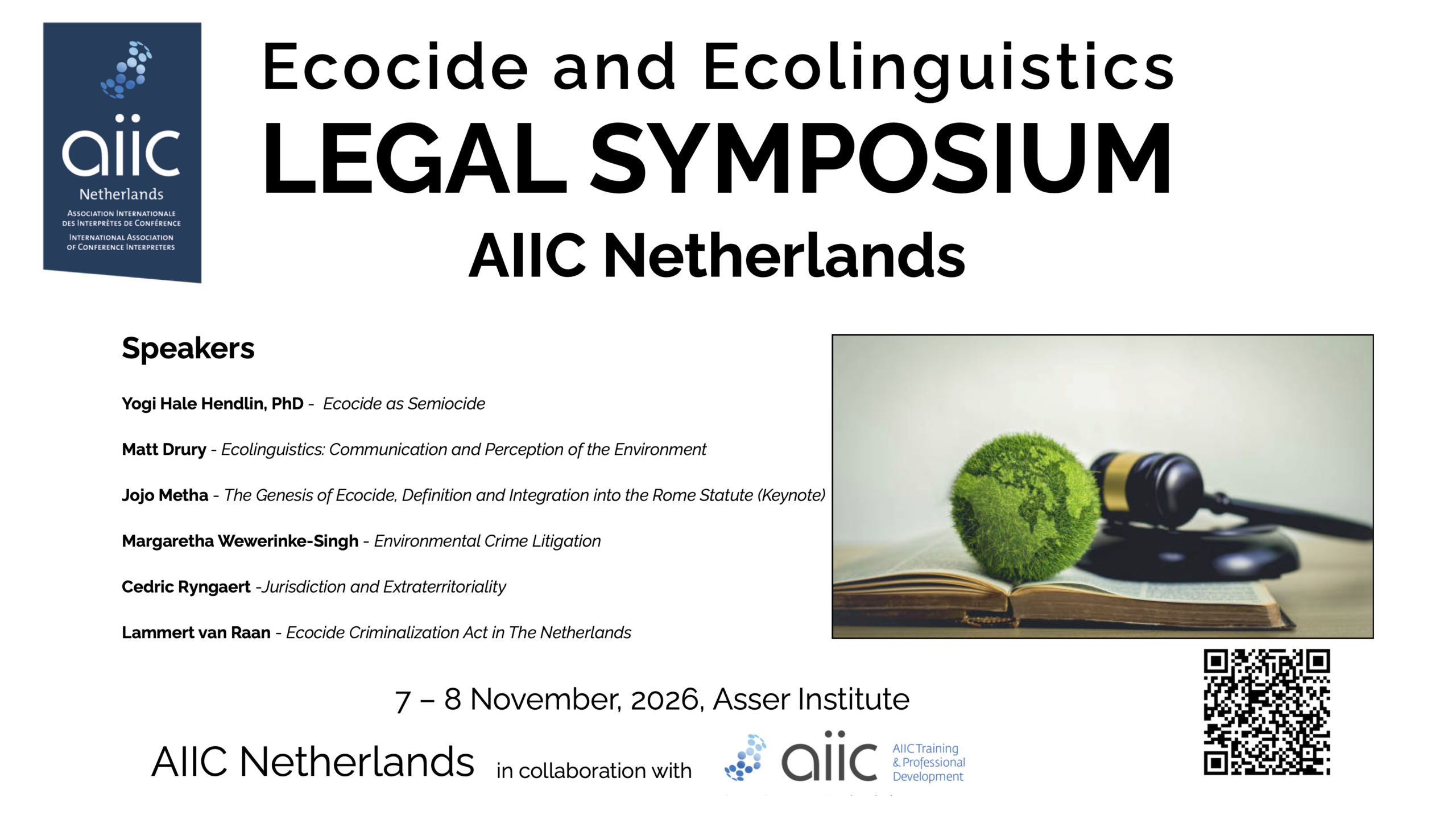
Tomorrow I’ll be giving a talk, Ecocide as Semiocide, for the International Association of Conference Interpreters, in The Hague.
Here’s the abstract: When we speak of ecocide, to what loss are we referring? Biodiversity? Habitat for a collection of species that have evolved together? The imperilment of a particular species? The changing baseline of climate, and how this percolates out into every nook of our environment? While all aspects touch upon what is lost through the systemic degradation of nature, they dance around a central, if understudied aspect of ecocide: the crime’s impact on all the affected organisms’ ability to make sense of their world. Semiocide — the accidental or deliberate eradication of another’s system for making meaning, recognizes that meaning is made in the world, for both humans and the more-than-human world. Acknowledging the social make-up of our communication systems, the integrity of our environments constitute the fidelity of our senses to detect friend or foe, food or poison, and other necessary discernments. This is equally true for humans as it is for other animals, plants, fungi, and bacteria. Reframing ecocide as semiocide allows us to both connect more intimately with the loss of the intelligible natural world around us, but also see that ecocide involves a dumbing down of other organisms’ sign systems and ability to read the world.